Ten Countries, One eSIM: Jim & Nicola's YeSIM Story
Jim and Nicola had been talking about a big Asia trip for the better part of three years. It was always the plan "for next autumn," then "definitely next spring," until one January evening they simply sat down, opened a spreadsheet, and booked ten flights. Six weeks. Ten countries. The trip they had been postponing became the trip they were actually taking.
The logistics kept them busy for weeks — visas, insurance, vaccines, a truly alarming number of browser tabs. But one problem they almost forgot to solve until a friend raised it over dinner: how do you stay connected across ten different countries without handing a fortune to your home mobile carrier or queueing at a SIM kiosk in every new airport?
Their friend had used YeSIM on a similar trip the year before and described the experience in two words: "just works." Jim and Nicola bought a YeSIM regional Asia plan before they left, scanned the QR code over a cup of tea, and landed in Tokyo connected before their bags hit the carousel. What follows is how it actually went.
1. Japan — where the trip began

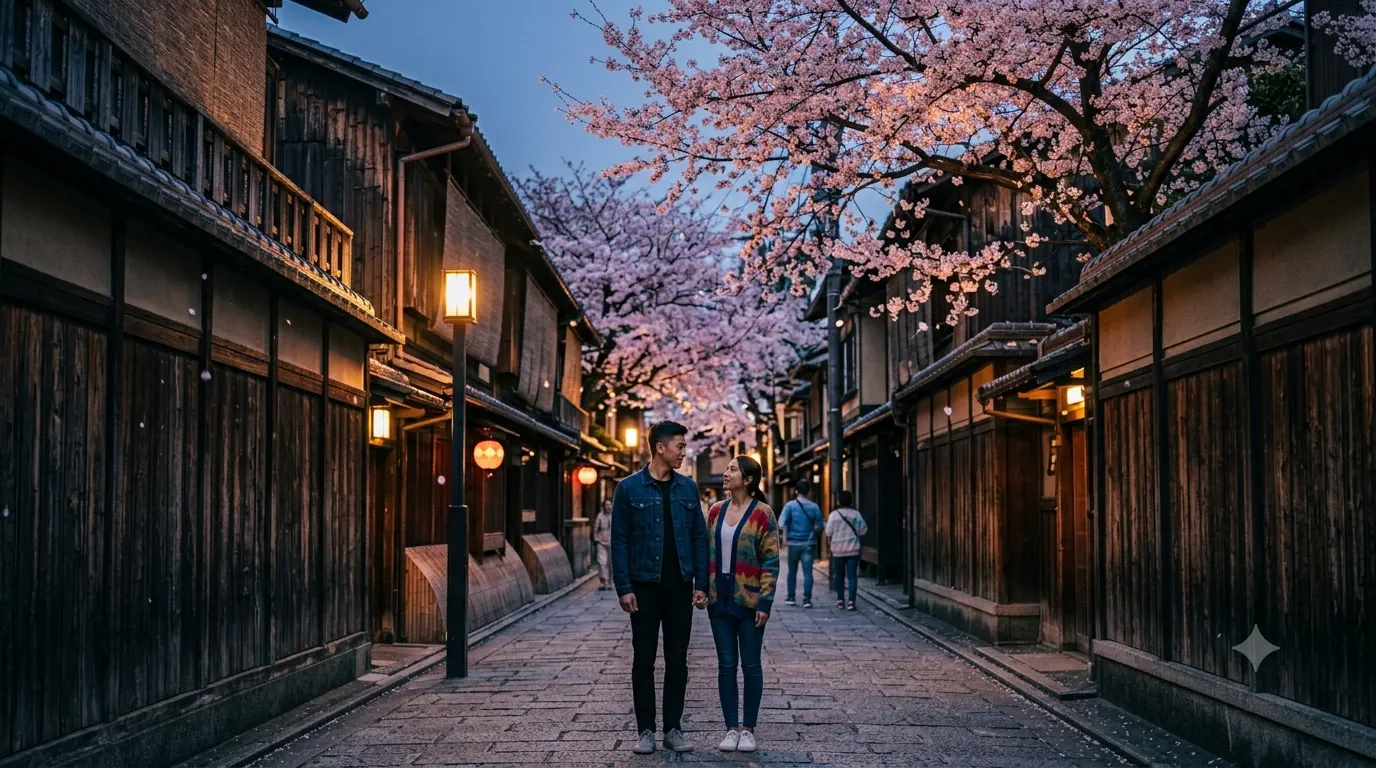
Tokyo in April is everything the photos promise and a few things they don't. The crowds at Shinjuku Gyoen were real, but so was the quiet that settled over the park an hour after opening when most of the day-trippers hadn't arrived yet. Jim and Nicola spent their first morning doing what most first-time visitors do: standing on a pavement, blinking at the volume of information on every surface, and reaching for Google Maps.
The YeSIM data came into its own immediately. Tokyo's train system is genuinely complicated if you're not used to it — overlapping metro lines, JR lines, private railways, all with different ticketing. Having reliable data meant they could look up the right fare, check real-time train departure boards, and translate the occasional station sign without hunting for a free WiFi signal. In Kyoto, three days later, Nicola used Google Lens in real time to read a menu in a tiny soba restaurant down an alley that had no English on anything. The fish was excellent. They would never have found it without a working data connection.
2. South Korea — navigating Seoul on foot

Seoul has a similar density to Tokyo but a completely different energy. The streets around Hongdae at midnight, the palace grounds at Gyeongbokgung in the early morning, the sheer scale of the Dongdaemun Design Plaza glowing against a dark sky — Jim had read about all of it and still found the reality more surprising than the description. Nicola, a food writer by hobby, had a list of restaurants longer than their actual itinerary.
Connectivity mattered here for a different reason. Korean restaurant culture leans heavily on QR-code menus and digital ordering, even at small neighbourhood spots. Without data, you're often looking at a blank screen or guessing from laminated photographs. The YeSIM held a solid signal throughout Seoul and in the hills around Bukhansan National Park where Jim insisted on a hike Nicola described as "ambitious, borderline irresponsible." They both made it back. Navigation intact.

3. Thailand — temples, tuk-tuks, and terrible traffic

Bangkok is a city that rewards the people who wander and punishes the people who plan too rigidly. Jim and Nicola arrived with a loose itinerary and promptly abandoned half of it within twenty minutes of checking in, when the woman at their guesthouse recommended a canal-side market that wasn't in any of the guides they'd read. They found it by following the map on Nicola's phone through a sequence of increasingly narrow streets that Google was confident about, even if they were not.
The journey south to Krabi brought one of the trip's best moments: an afternoon on a long-tail boat between limestone islands so vertical they looked engineered rather than geological. Jim managed to upload a short video to send to his parents while still on the boat — a signal-dependent miracle he immediately reported with the kind of disproportionate satisfaction that only travellers understand.
4. Vietnam — three cities, one week
They flew into Hanoi, took the overnight train to Da Nang, and finished in Ho Chi Minh City. It is, in retrospect, probably too much Vietnam for a single week, but they have no regrets. Hanoi's Old Quarter is one of those rare city centres that actually deserves its reputation: a grid of streets each named for the trade once conducted there, now a labyrinth of cafes, fabric shops, and street-food stalls doing a brisk trade at every hour. Navigating it without data would have been a genuine adventure. Navigating it with a working map was merely a pleasant one.
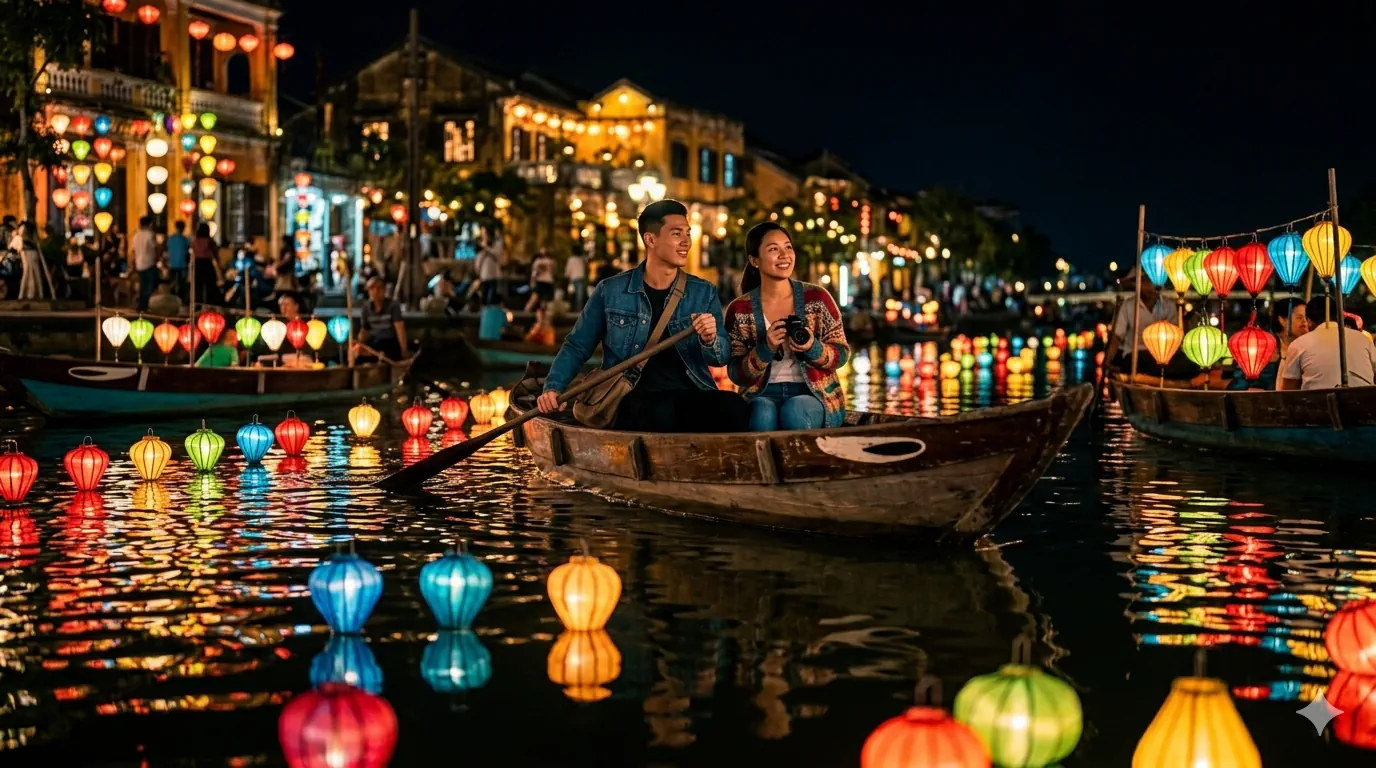
Hoi An, a detour from Da Nang on the way south, was Nicola's favourite stop of the entire trip. The lanterns at night along the riverfront are genuinely as beautiful as the photographs suggest, which is rarer than you might expect. They booked a cooking class on the same morning they arrived, found it online in about four minutes, and paid before they'd finished their coffee. Small moments. Data dependent.
5. Singapore — a one-night stopover that became two
Singapore was always intended as a transit stop. They had a single evening and a flight the following afternoon. Then they found themselves at Maxwell Food Centre at ten in the morning, working their way through plates of chicken rice and char kway teow, and quietly extending their layover by twenty-four hours. Singapore Changi Airport makes this easy — there's an entire hotel inside the terminal.
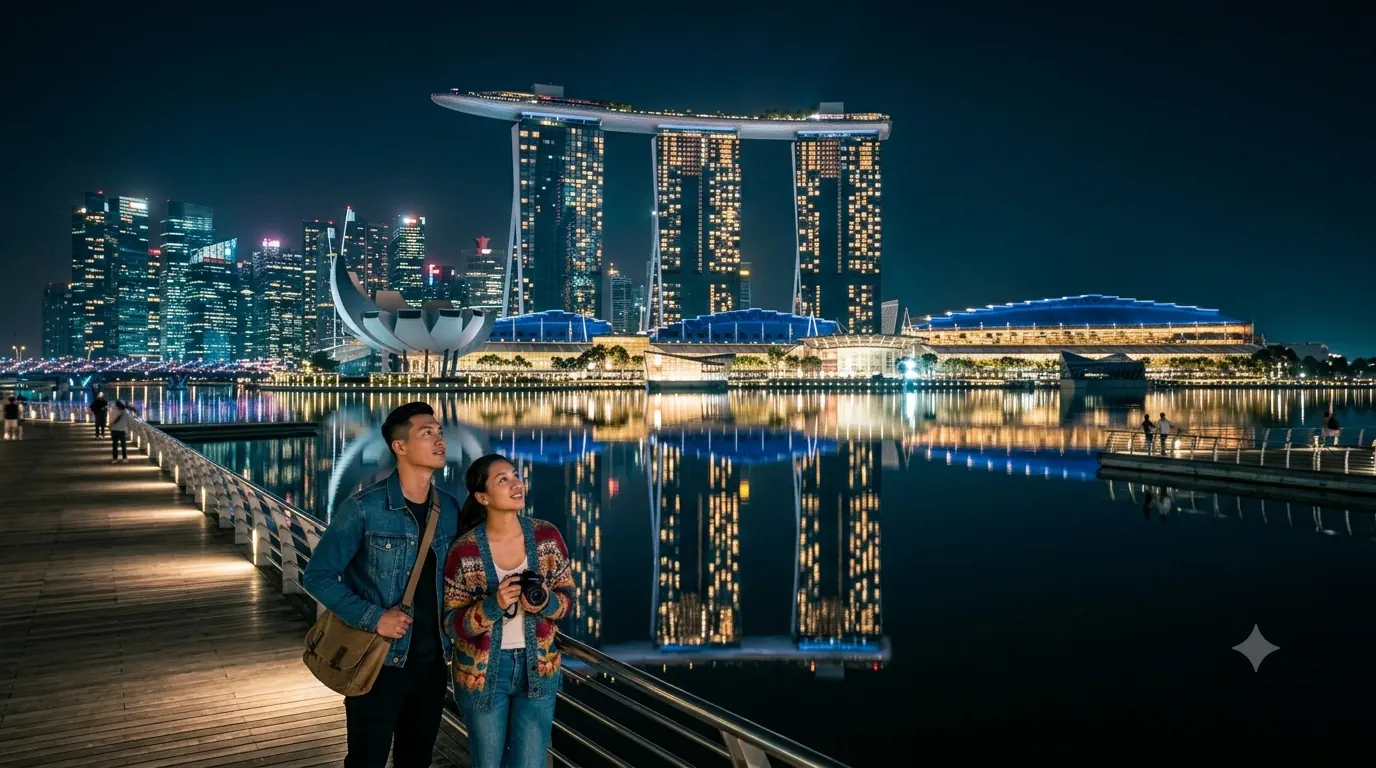
The city itself is small enough to cover on foot in a long day if you're willing. Gardens by the Bay in the late afternoon, a walk across to Marina Bay Sands as the light dropped, then back through Chinatown for dinner. Jim had the YeSIM data running the entire time — Google Maps, a few restaurant lookups, the occasional message home — with no drama and no signal gaps he could remember.

6. Indonesia — Bali's rice terraces and a slow exhale

After the relentless forward momentum of the previous weeks, Bali was where the trip changed gear. They rented a small villa outside Ubud for five days and did very little deliberately. Morning walks through the Tegallalang rice terraces before the tour groups arrived. Afternoons reading. One motorcycle ride they had both been slightly nervous about that turned into the single most enjoyable afternoon of the whole trip.
Even in a slower mode, data proved useful in ways they hadn't expected. Nicola had been journalling the trip and wanted to look up the names of specific ceremonies happening at a local temple during their stay. Jim used the connection to download offline maps for the surrounding area before they headed out on the bike — a small piece of forward planning that kept them from getting genuinely lost in the hills above the valley.
7. Philippines — islands that justify the journey

El Nido in Palawan is one of those places that requires several flights and a degree of patience to reach, and rewards you so completely for the effort that you feel slightly guilty telling people how easy it was. The island-hopping tours run from the town beach and spend the day moving between lagoons and coves where the water is a shade of turquoise that looks edited even when you're standing in it.
Signal in El Nido is patchy in places but present. YeSIM found local networks reliably, and while Jim wasn't uploading video from the middle of a lagoon, he had enough connection at the guesthouse each evening to plan the following day's boat tour and check the weather. Nicola, who had been more sceptical about eSIMs before the trip, declared herself converted somewhere around day thirty-two.
8. Malaysia — Penang and the argument for slow travel
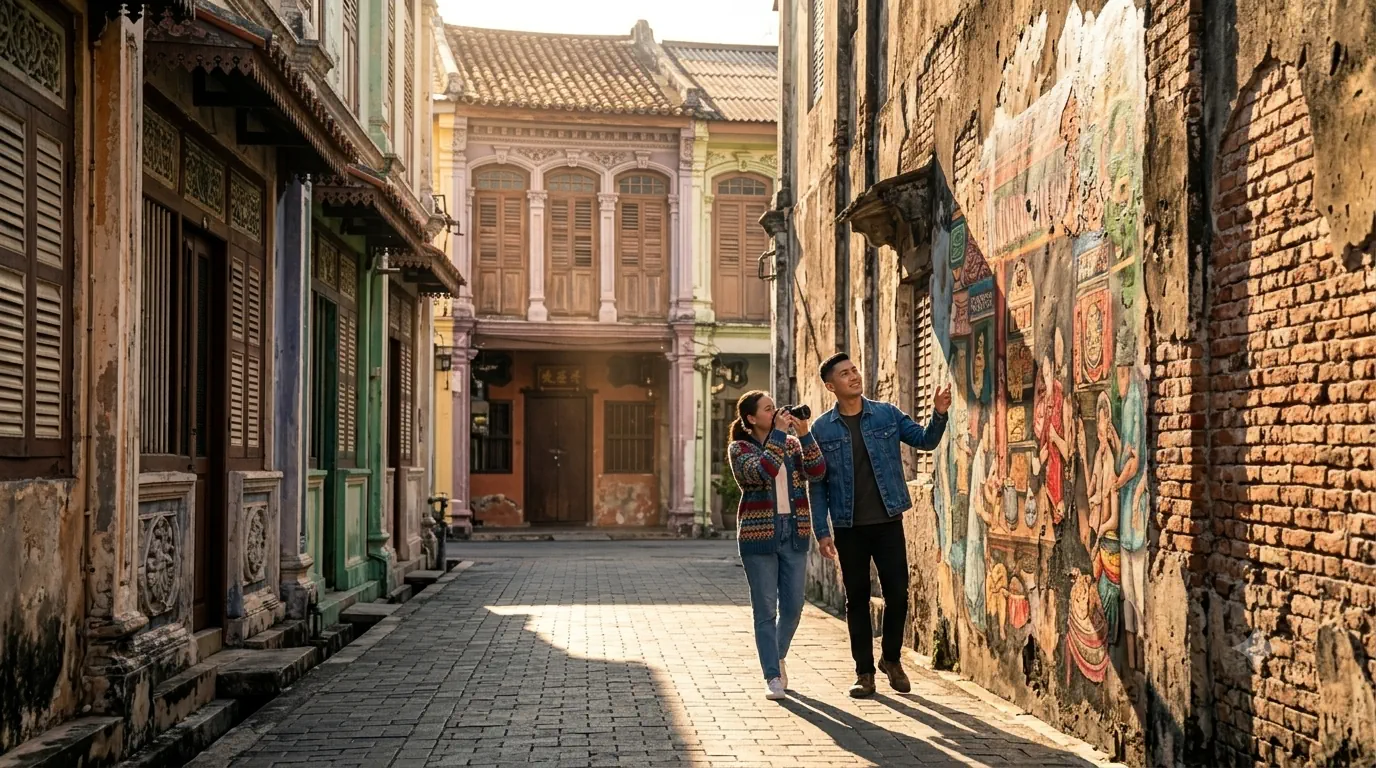
They only had three days in Malaysia, all of them in Penang, and it wasn't enough. Georgetown's street art and Peranakan shophouses could occupy a week on their own, and the food — the Hokkien mee, the assam laksa, the char koay teow that Nicola ate three times in two days — is the sort of thing that people move countries for. Jim spent a morning at a coffee shop on Armenian Street doing nothing more productive than reading and watching the street, and reported it as one of the better mornings of the trip.
With data, they found a food tour run by a local guide that hadn't appeared in any of the mainstream travel sites but had a tiny presence online. It was the best forty-five Malaysian Ringgit either of them spent. The guide, a retired schoolteacher named Mr Lim, had opinions about char koay teow that Nicola has since quoted in conversations it was definitely not relevant to.

9. Taiwan — night markets and mountain roads
Taipei's night markets are not, despite what casual internet consensus suggests, all the same. Raohe is older and more neighbourhood in character. Shilin is enormous and international and slightly overwhelming. Ningxia is where locals actually go on a Tuesday evening and where the queue for oyster vermicelli moves faster than it looks. Jim and Nicola visited all three and reached firm conclusions about which they preferred that they are still arguing about.
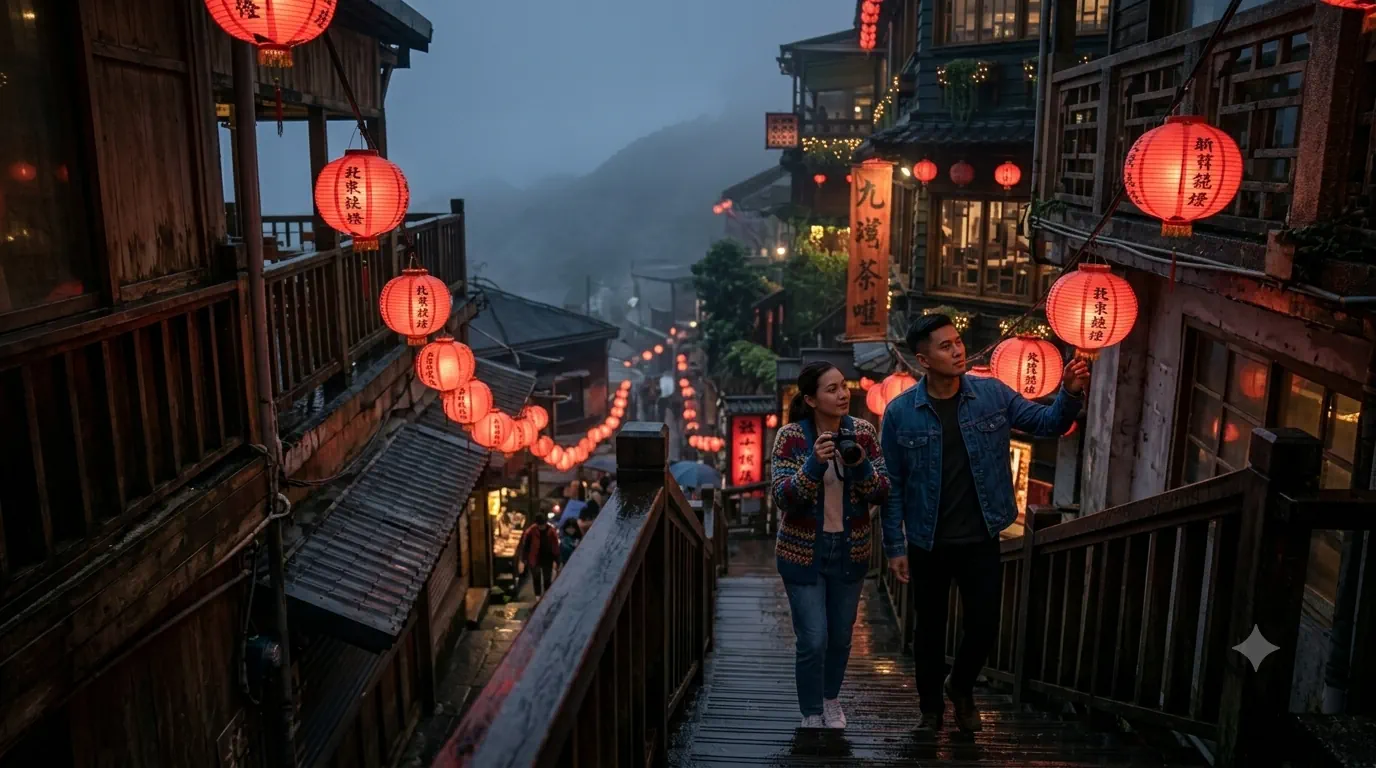
The drive to Jiufen in a hired car — a village of tea houses on a hillside above the coast — required data for navigation and delivered one of the most cinematic views of the trip: red lanterns hanging in the fog, wooden staircases dropping between buildings, the sea somewhere below when the cloud thinned enough to show it. Nicola photographed it. Jim looked at it. They agreed, unusually, that the other one had done the right thing.
10. Hong Kong — a final sprint
Hong Kong was the last stop and, in the way of last stops, felt both rushed and overlong. They arrived knowing they were already thinking about home. They also arrived knowing they had one more city to treat properly, so they set an alarm for 6am on their first morning, took the MTR to the Peak before the crowds, and watched the skyline emerge from morning haze below them while drinking very average coffee from a very good vantage point. Some mornings earn their early start.
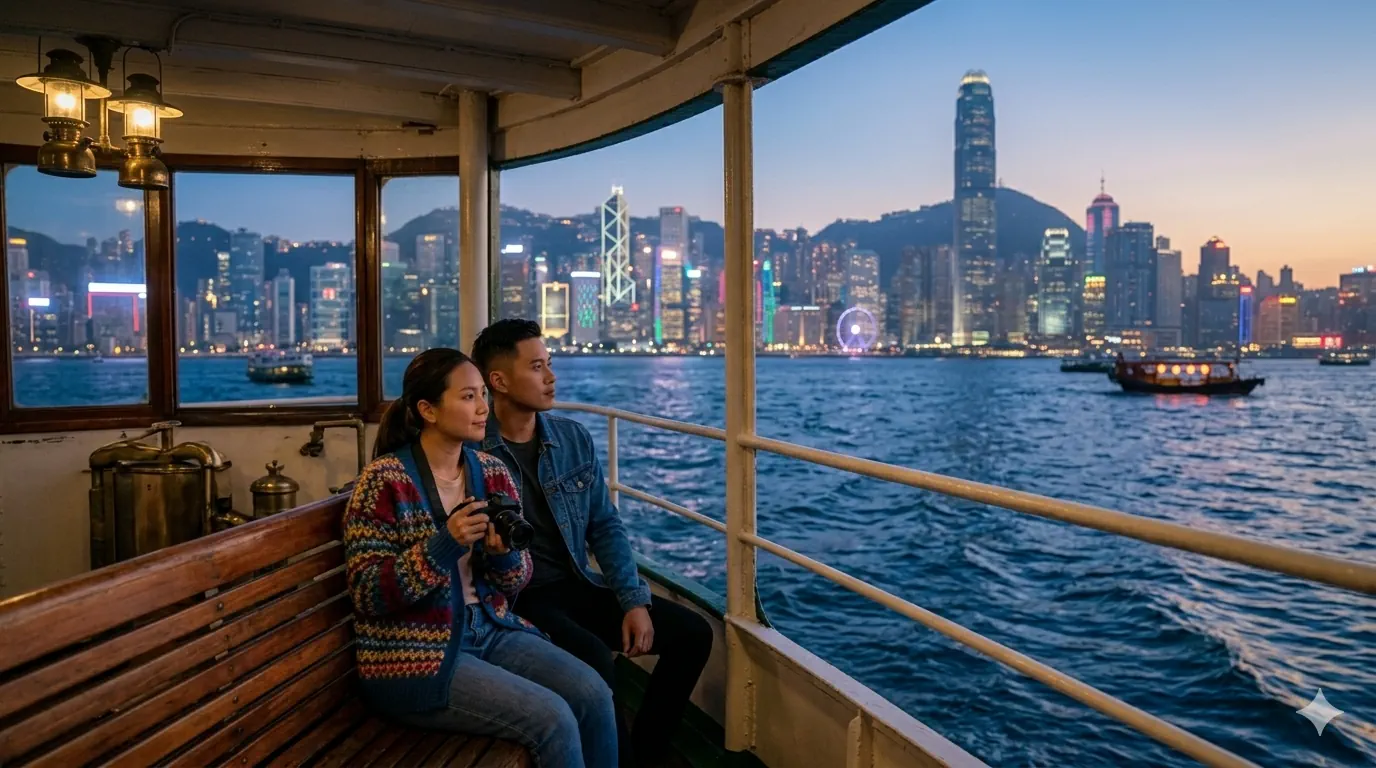
Dim sum in Wan Chai. The tram across Hong Kong Island. The Star Ferry at dusk, which costs next to nothing and delivers one of the best views in the city for free. Jim used the YeSIM data right up to the departure gate. Nicola's final message to the family group chat — "on our way home, both still alive" — was sent from the gate using the same plan she'd activated on the sofa in Manchester six weeks earlier.
What Jim and Nicola actually thought of YeSIM
They didn't spend the trip thinking about their eSIM. That, they both agreed, was the point. It was there when they needed it, invisible when they didn't, and it never required them to hunt for airport WiFi, negotiate a SIM counter in a language they didn't speak, or do anything more complicated than glancing at their signal bars. For a six-week, ten-country trip, that kind of reliability has genuine value.
The coverage wasn't perfect in every remote corner — a narrow valley in Bali, a lagoon in Palawan — but it was dependable in every city and strong enough in the places that mattered. The app made it easy to check remaining data and top up without navigating a foreign carrier's website in a second language. Nicola, who keeps a running notes document of things she'd do differently on any given trip, has exactly one entry about their connectivity: she wishes they'd known about it sooner.
"We didn't really think about it after the first day. It just worked. Which is exactly what you want when you're trying to think about everything else." — Nicola
Try YeSIM on your next Asia trip
YeSIM offers regional and country-specific plans across Asia, with coverage in Japan, South Korea, Thailand, Vietnam, Singapore, Indonesia, the Philippines, Malaysia, Taiwan, Hong Kong, and many more destinations. Plans are bought and activated entirely in the app — no SIM card, no queuing, no roaming surprises.
Want to compare YeSIM against other providers before you decide? Read our honest comparison of eSIMs, pocket WiFi and local SIMs, or head straight to our destination guides for the specific countries on your itinerary.